
Your Surety Is Not Your Partner. It Could Be.
by Wade Caldwell · October 15, 2026 · 4 min read
The short version
- The surety carries the paper, but in most programs the agent carries the risk, and the contract says so.
- Build-up funds, indemnity agreements and terms that change without notice leave many agents further from a partnership than they think.
- Real carrier partnerships exist, and the agents who have them are usually the ones who asked with their numbers in hand.
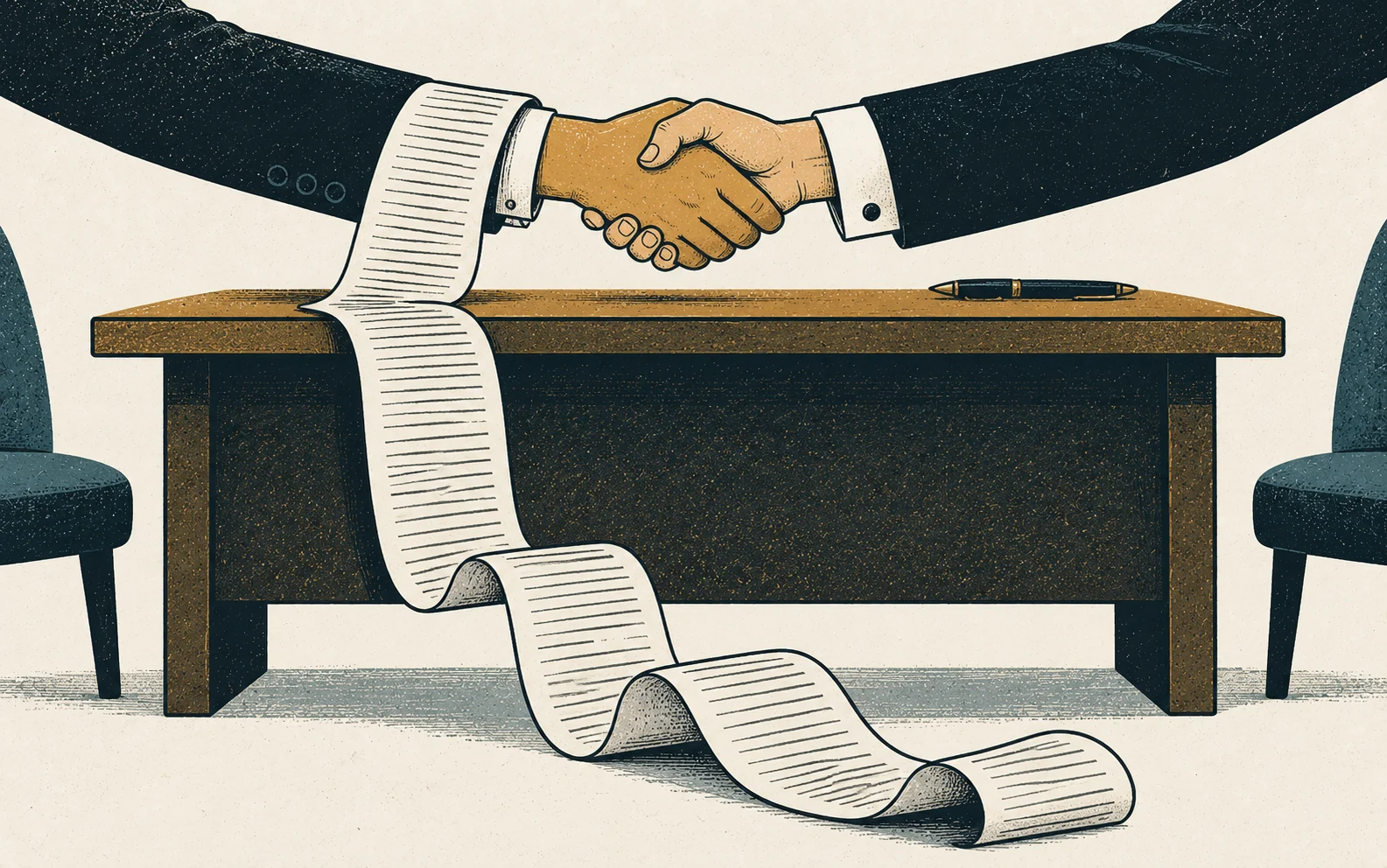
Every surety describes its agents as partners. The word appears on the websites, in the recruiting pitches and on the banners at every conference booth, and it is usually sincerely meant. The program agreement tends to tell a more complicated story, however, and it is the agreement rather than the banner that decides who carries the losses when a bond goes wrong.
That is not a knock on carriers. They are insurers doing what insurers do: pricing risk, protecting capital and passing as much exposure as they can to whoever is closest to it. In bail, that is you. The question is not whether your surety is a partner in the marketing sense. It is whether the terms make you one.
Who actually carries the risk?
On paper, the surety guarantees the bond to the court. In practice, most programs push losses back toward the agent. Agents typically sign indemnity agreements with the carrier or their general agent, forfeitures are charged against the agent's funds, and the carrier's own capital sits several layers behind yours. We walked through the mechanics in how the surety side works.
That arrangement is standard, and it is not sinister. But it means the word "partner" is doing a lot of work.
Whose money is in the fund?
Yours. A slice of every premium you write is held back by the carrier in a build-up fund, a reserve against your future losses. It is your money, held somewhere else, on terms the carrier wrote. Plenty of agents cannot say exactly how much is in theirs, what it earns, or when they can get it out. If that is you, start with our guide to reading your BUF statement.
A genuine partner would make that statement easy to read, and some carriers do. Many, unfortunately, do not.
What does one-sided look like?
- Build-up fund terms that let the carrier hold your money long after you stop writing.
- Forfeitures charged to you before you have had a real chance to recover the defendant or apply for remission.
- Collateral rules and writing limits that change without notice or explanation.
- No clear answer to the question "what happens to my fund if I leave?"
- Pricing guidance delivered as if it were law. The California antitrust settlements put that in writing.
None of these is unusual on its own. Together, they describe a relationship where the agent carries the risk and the carrier holds the cash.
3 of 5
is how most agents rated the health of the bail industry in AIA Surety's State of Bail survey.
Why do agents accept it?
Because they need the paper. Without a surety appointment an agent cannot write bonds, and switching carriers is slow, disruptive and sometimes expensive. Newer agents in particular sign the first program they are offered and never read it again.
And because most agents never ask. Carriers respond to agents who know their numbers. An agency that can show its loss history, recovery rate and collections is negotiating. One that cannot is just signing.
What does real partnership look like?
- Transparency. Clear, regular BUF statements and straight answers about what the fund earns and when it is released.
- Time on forfeitures. Support for recovery and remission before charges hit your account.
- Stable terms. Writing limits and collateral rules that change with notice and a reason.
- A voice. Carriers that back their agents in the statehouse, not just at the booth.
These carriers exist. The agents who have them tend to be the ones who asked for them.
What should you do this month?
Pull your program agreement and your last BUF statement and read both properly. Write down the three terms you would change if you could. Then ask. Ask your carrier's representative, ask other agents what their programs look like, and if the answers are poor, find out what a move would take. Sureties are licensed and regulated by each state's insurance department, which you can find through the NAIC directory.
The partnerships worth having
The best surety relationships in this business are genuine partnerships, built by agents who know their numbers and carriers who respect them. They are good for both sides: the carrier gets a disciplined book, the agent gets fair terms and a backer who stays through the hard files.
There is no reason yours should be anything less. It starts with reading what you signed.
Final thoughts
Carriers are not the villain in this story, and treating them that way gets agents nowhere. They are businesses, and most will give a well-run agency better terms if it asks with numbers in hand.
The trouble is that most agents never ask. They sign the first program, file the BUF statements unread, and find out what the terms really mean the week a big forfeiture lands. Read the agreement before you need it. Terms vary widely by carrier and by state, so get advice on anything you do not understand before you sign.
Markets and Surety
READ MORE
Zero Down Is Killing Bail. Here Is What Works Instead.
by Wade Caldwell · October 1, 2026
The Ten Percent Was Never Law: Inside California's $69 Million Bail Settlements
by Wade Caldwell · July 15, 2026
Reading Your BUF Statement: What the Carrier Does Not Explain
by Wade Caldwell · June 18, 2026